
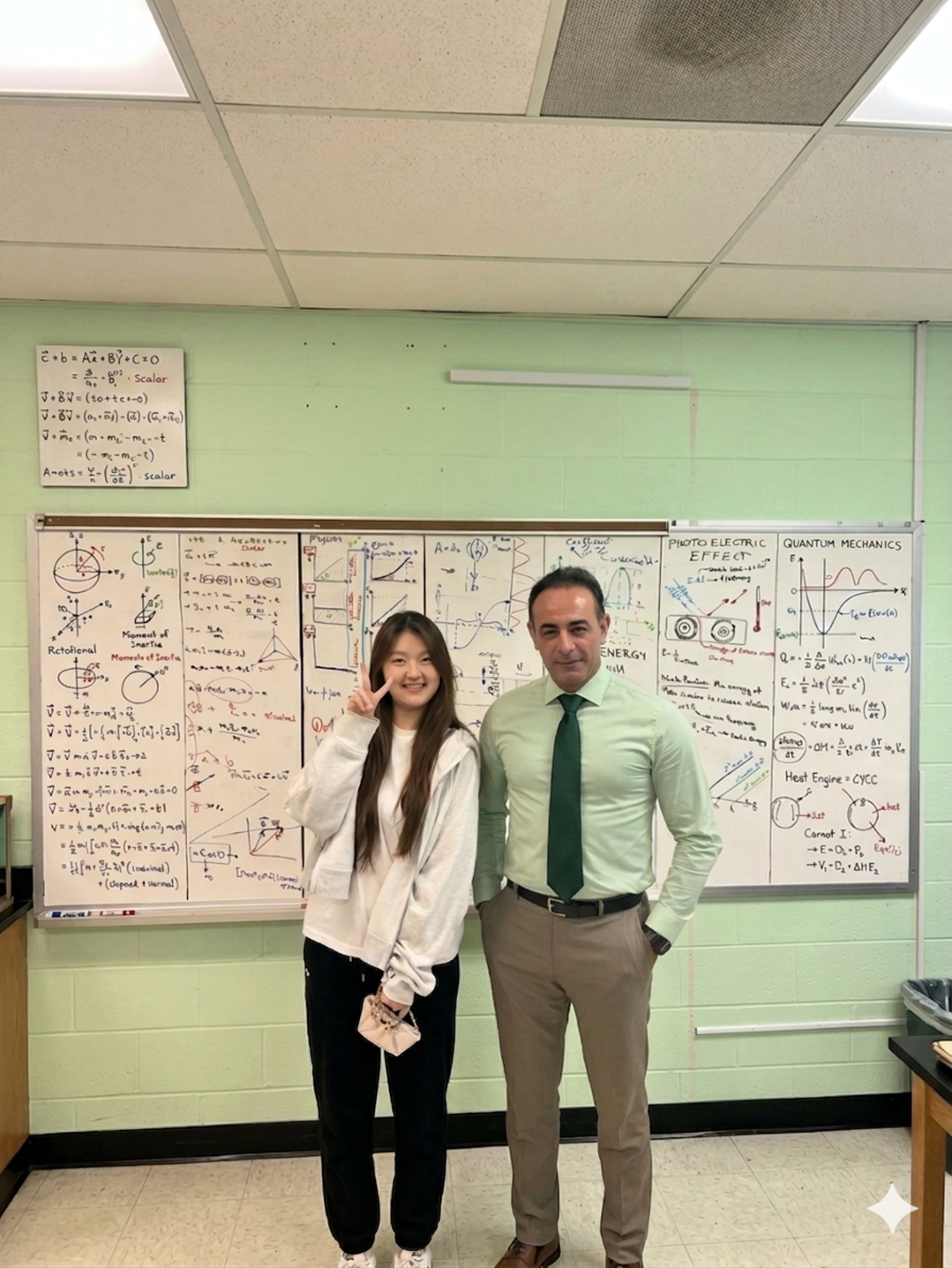
Physics 12 (SPH4U)
SPH4U (Physics) is the Ontario Grade 12 physics course that prepares students for university programs in science and engineering. The course focuses on dynamics, energy, fields, waves, and modern physics, with an emphasis on problem-solving and real-world applications.
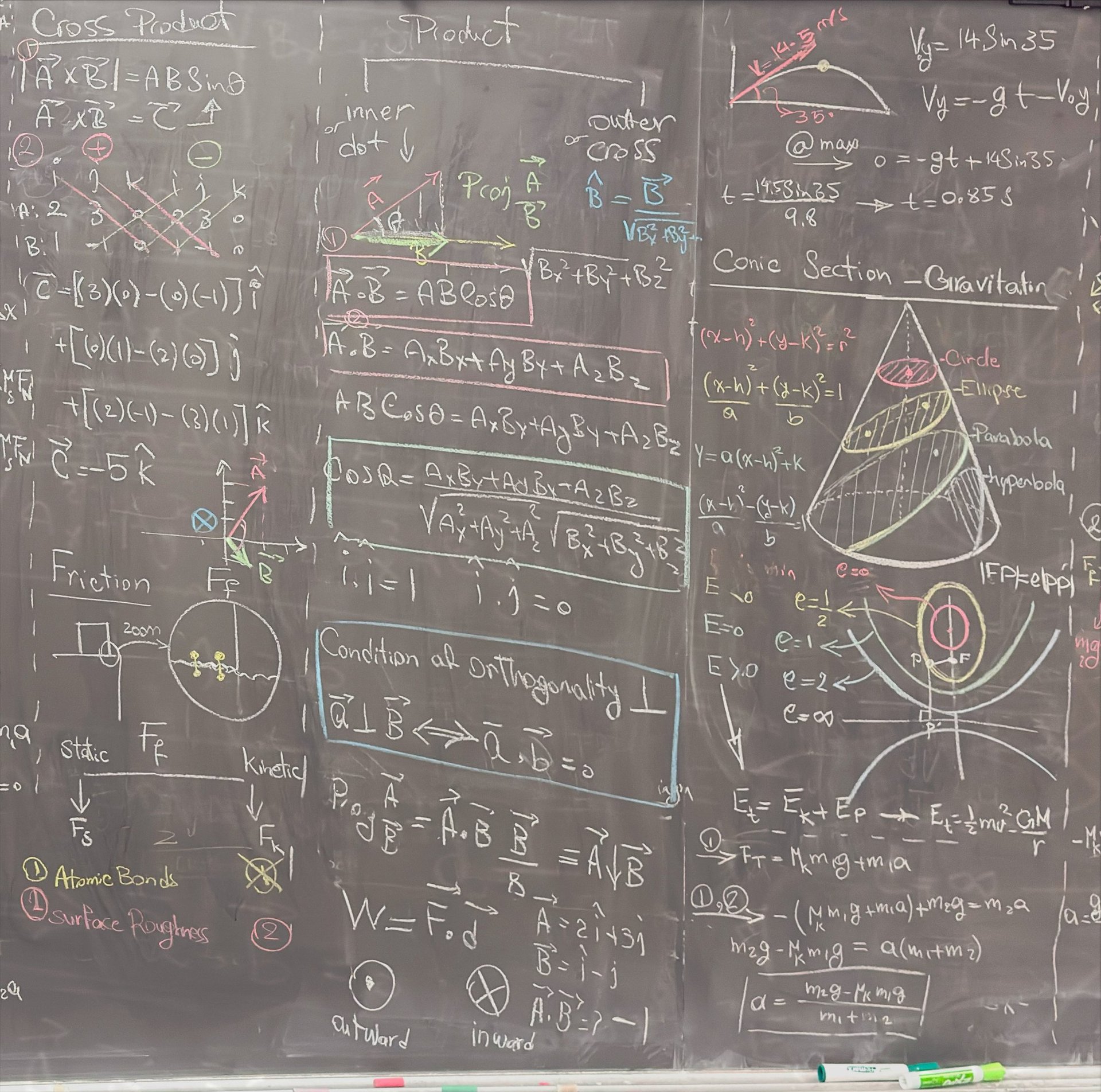
CHAPTERS
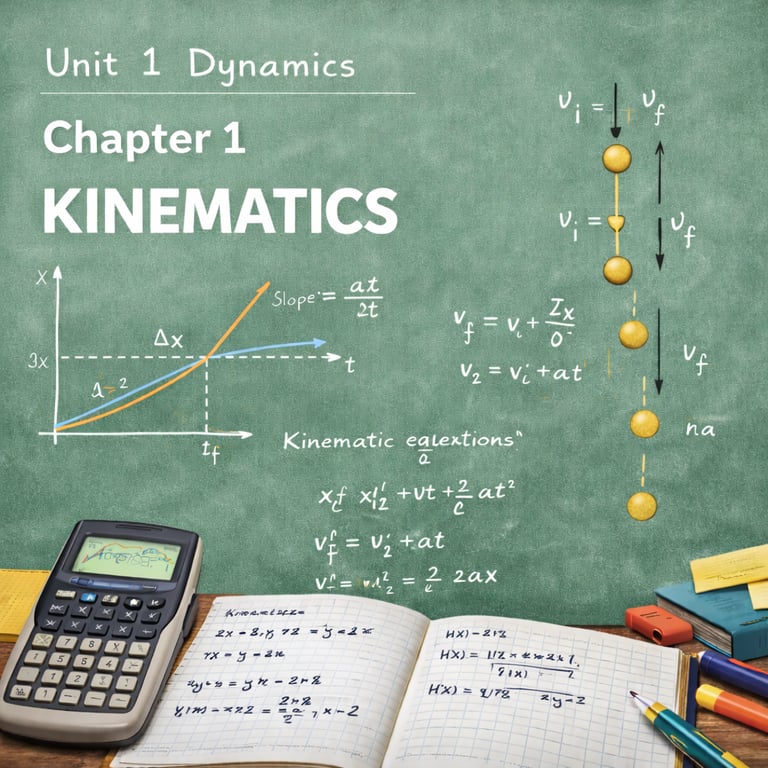
Chapter 1 - Kinematics
Analyze motion using vector quantities: displacement, velocity, and acceleration
Interpret and extract information from motion graphs (x–t, v–t, a–t)
Apply kinematic equations to solve real-world motion problems
Includes visual explanations and guided examples
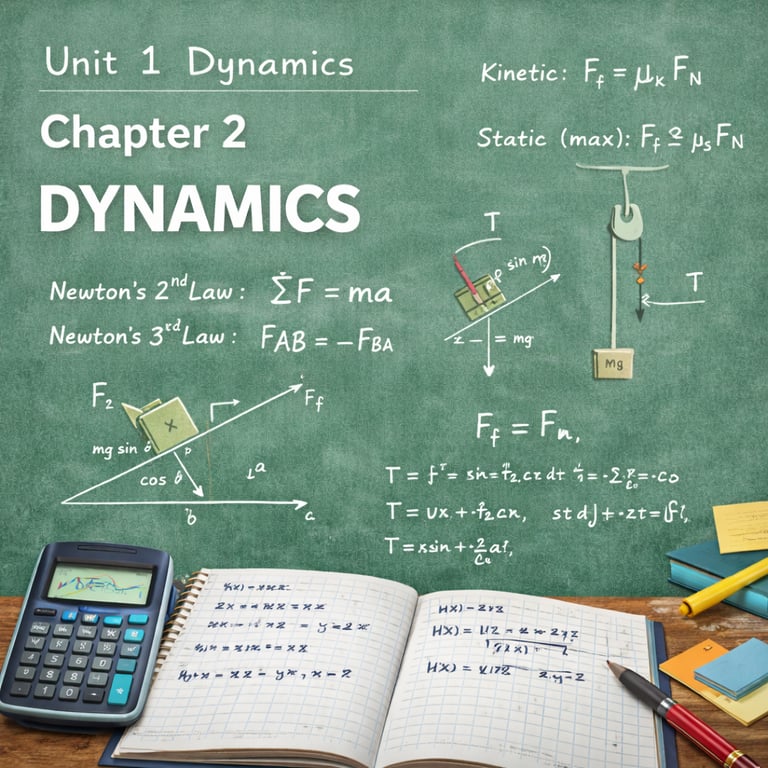
Chapter 2 - Dynamics
Newton’s Second Law and its application to motion
Newton’s Third Law action–reaction force pairs
Static and kinetic friction
Free-body diagrams for systems including inclined planes and pulleys
Tension forces in connected systems
Includes step-by-step solutions and practice problems
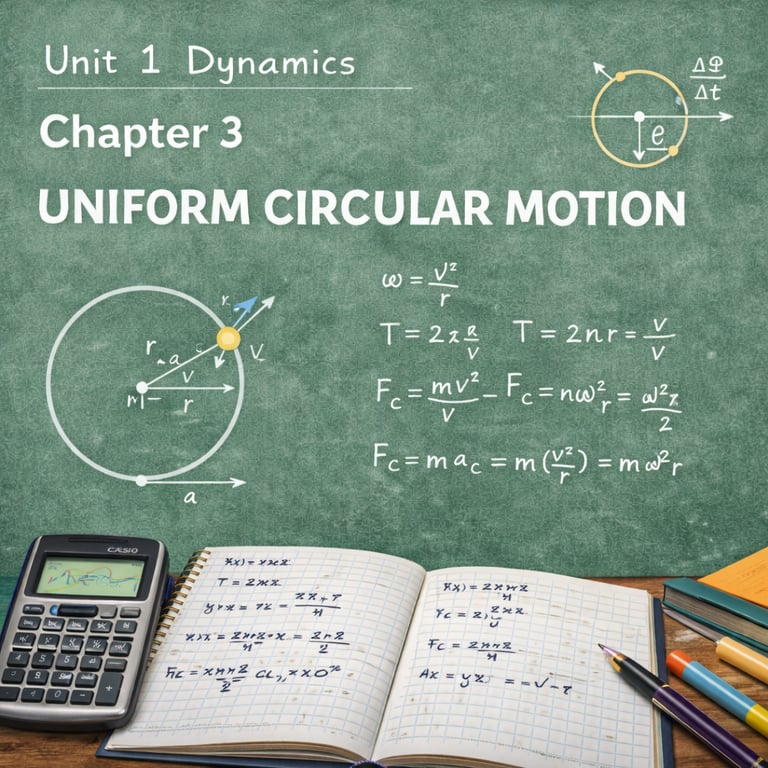
Chapter 3 - Uniform Circular Motion
Angular displacement, velocity, and acceleration
Centripetal acceleration and centripetal force
Relationships between linear and angular quantities
Applications of circular motion (cars, satellites, rotating systems)
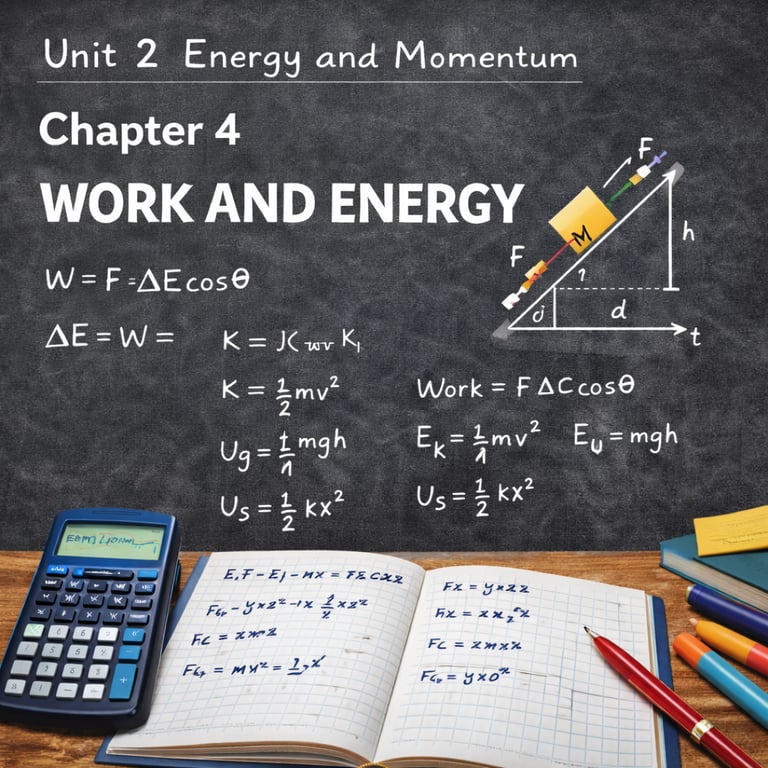
Chapter 4 - Work and Energy
Work as area under the force–displacement graph
Kinetic energy and work–energy theorem
Potential energy: gravitational and elastic
Conservation of mechanical energy in real-world systems
includes energy-based problem-solving strategies
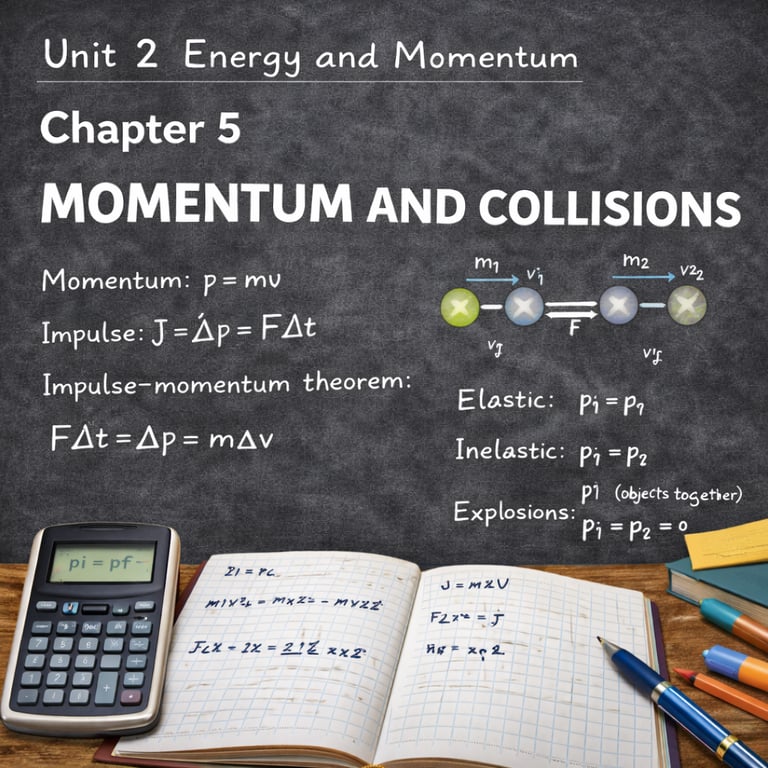
Chapter 5 - Momentum and Collisions
Momentum and impulse relationships
Conservation of momentum in one- and two-dimensional systems
Elastic vs. inelastic collisions and energy considerations
Problem-solving in collisions and explosion scenarios
Includes visual explanations and guided examples
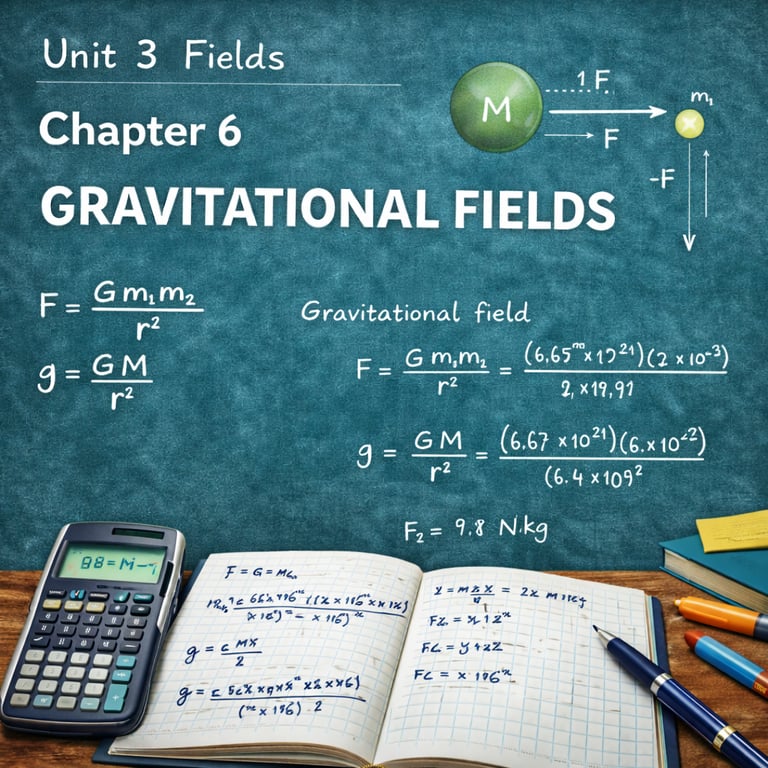
Chapter 6 - Gravitational Fields
Gravitational field concept and inverse-square law
Gravitational potential and potential energy
Orbital motion: satellites, circular orbits, escape velocity
Applications in astrophysics and space systems
Includes notes, solved examples, and practice problems
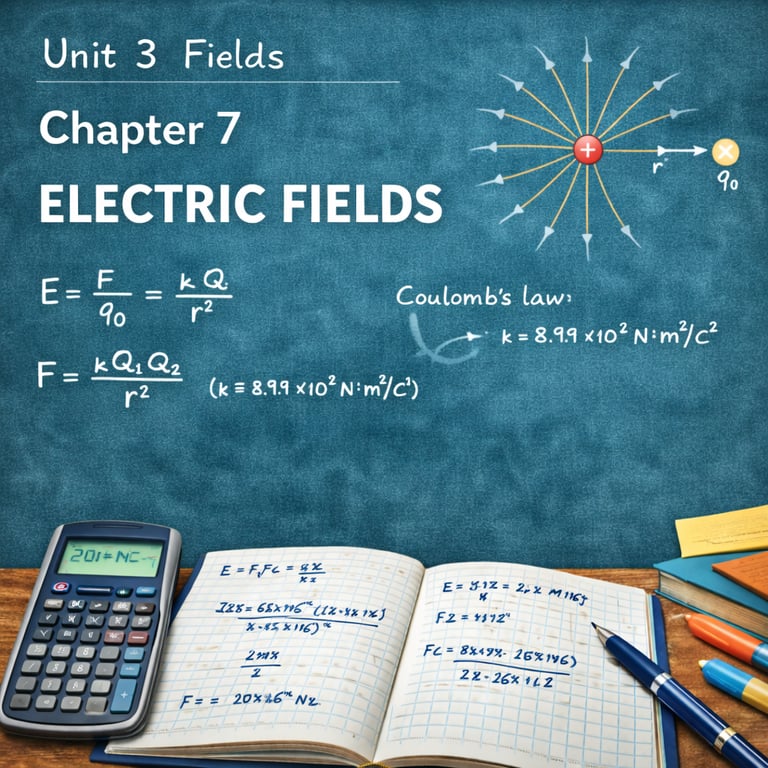
Chapter 7 - Electric Fields
Electric field concept and field lines
Coulomb’s law and forces between point charges
Electric potential and potential energy
Applications: capacitors, charged particles, and field interactions
Similar to gravitational fields, but for electric charges
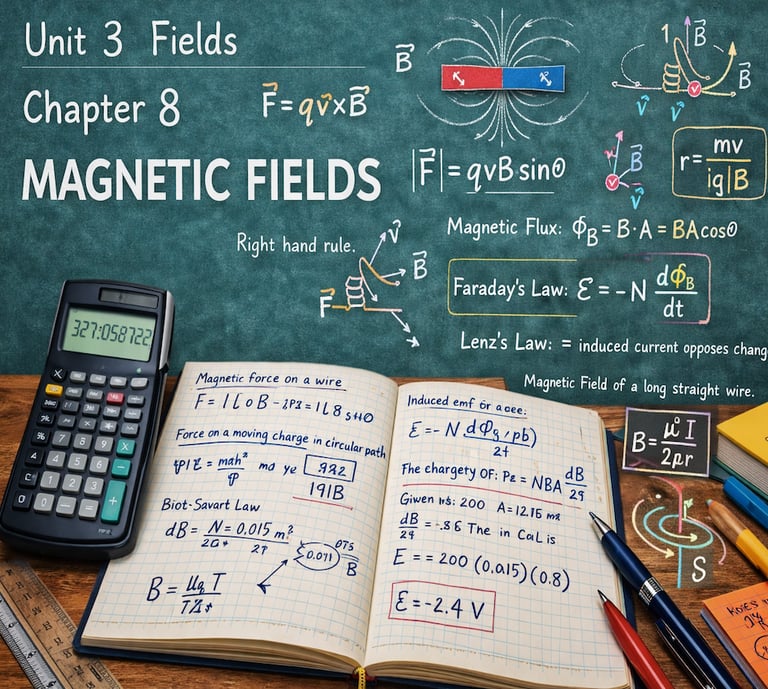
Chapter 8 - Magnetic Fields
Magnetic fields produced by currents and permanent magnets
Motion of charged particles in magnetic fields (circular motion)
Magnetic force on conductors and the right-hand rules
Applications: electric motors, generators, and particle motion
Includes notes, solved examples, and practice problems
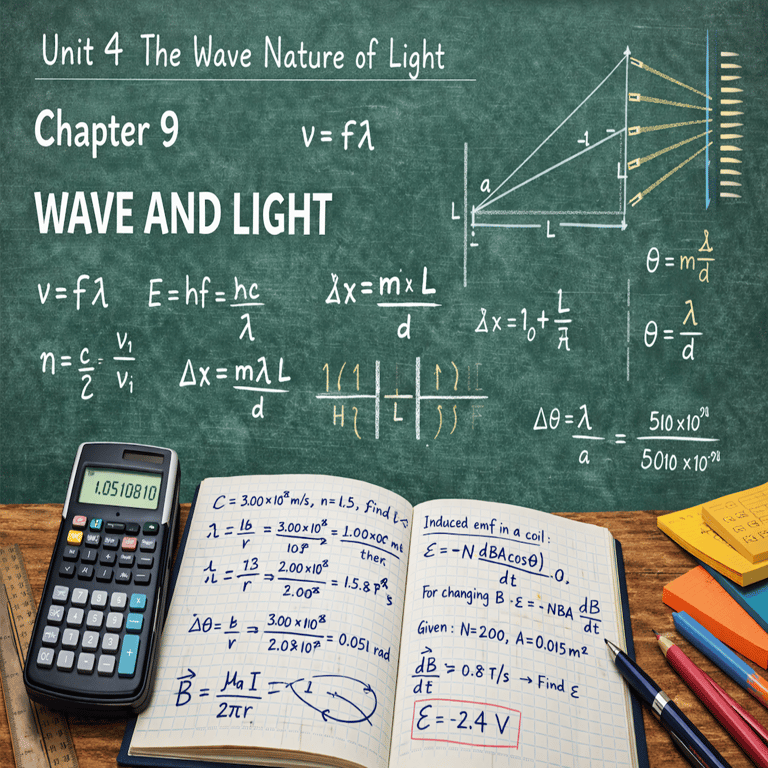
Chapter 9 - Wave
Wave properties and relationships
Interference, diffraction, and wave superposition
Light as an electromagnetic wave and photon model
Applications: optics, lenses, and wave phenomena
Includes notes, solved examples, and practice problems
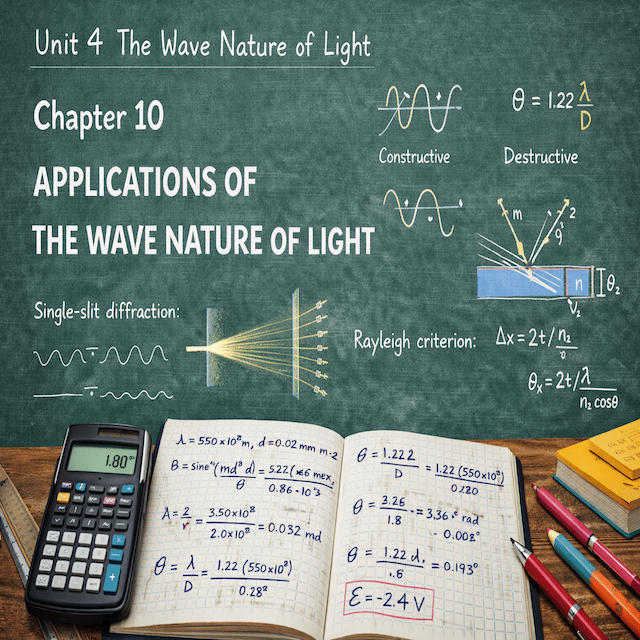
Chapter 10 - Application of The Wave Nature Of Light
Wave properties and relationships (v = f\lambda)
Interference, diffraction, and wave superposition
Light as an electromagnetic wave and photon model
Applications: optics, lenses, and wave phenomena
Includes notes, solved examples, and practice problems
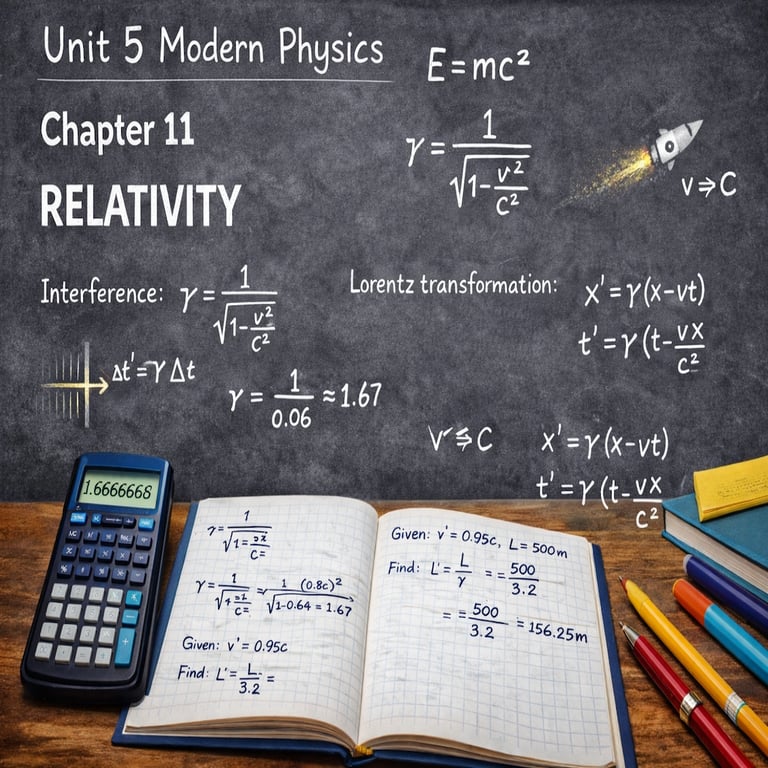
Chapter 11 - Special Relativity
Einstein’s postulates and the constancy of the speed of light
Time dilation and length contraction equations
Relativistic energy and momentum relationships
Applications: particle accelerators and high-speed motion
Includes notes, solved examples, and practice problems
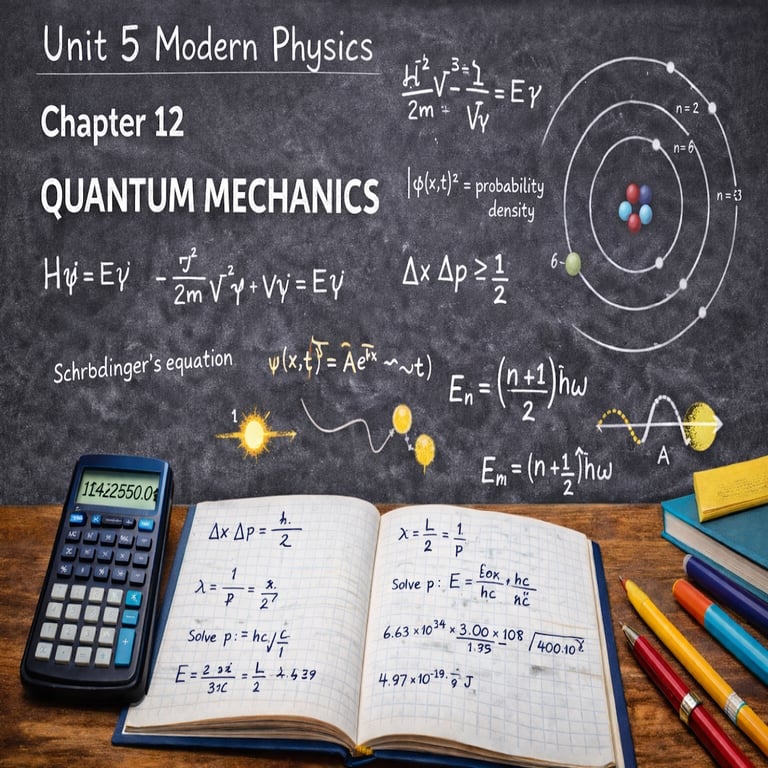
Chapter 12 - Quantum Mechanics
Photoelectric effect and evidence for quantization
Photon energy and Planck’s equation (E = hf)
Bohr model and discrete energy levels
Applications: lasers, semiconductors, and modern devices
Includes notes, solved examples, and practice problems